How Two Companies Use Social Media to Change the Conversation About Plastics and the Environment

The 1970s and 1980s were a great time to be in the plastic film industry in the United States. All over the country, small manufacturing companies began popping up to meet this growing demand for plastic packaging that had suddenly become an essential part of almost every industry. And a lot of these same companies are still in business today.
But times have changed, and more companies and consumers are looking for ways to limit plastic use because of environmental impacts. For those plastics companies from the earlier era, communicating their understanding of these environmental issues and their commitment to finding solutions is key not only to differentiating themselves in the marketplace but to their ongoing survival.
Social Media – A New Approach for a New Idea
Social media seems like it would be a great place to communicate that message, giving companies the chance to explain their changed vision in a variety of different ways directly to their target audiences. A few plastics companies are beginning to explore these possibilities. And while these may not be the social media juggernauts of some larger brands, they do offer some insights for companies looking to start using social media as a way to change perceptions about their company and their industry.
Petoskey Plastics.
A family-owned resin, film and bag manufacturer based in (you guessed it) Petoskey, Michigan, Petoskey Plastics has been in business since 1970. According to their website, they are an environmentally-focused manufacturer of products and custom plastic solutions.

The Good: Petoskey Plastics is active on multiple social media channels, including Facebook, Linkedin, and Twitter. In July they ran a series of posts called “Made in America” telling the story of each of their manufacturing plants, and had an accompanying blog post on their website. Earlier in the year, they did a series of posts during Earth Week that got a higher engagement rate (when compared to others) and very effectively linked Petoskey Plastics to their environmental focus.
The Not so Good: Although they’ve put out some great content to align with specific events (earth day, 4th of July) they did not continue those type of posts throughout the year, missing an opportunity to continue the engagement. They also have separate social media pages for each of their brands, but the purpose of these separate pages is unclear.
The Takeaway: Petoskey Plastics has made some good content that communicates its focus on the environment, but infrequent postings and a lack of clear strategy for each channel limits the impact.
Polykar:
Also a family-owned plastics company, Polykar is based in Montreal, Canada. According to their website, Polykar manufactures sustainable flexible packaging for a variety of markets, as well as private label solutions. Their website reinforces that messaging on every page and includes a full section on their sustainability initiatives.
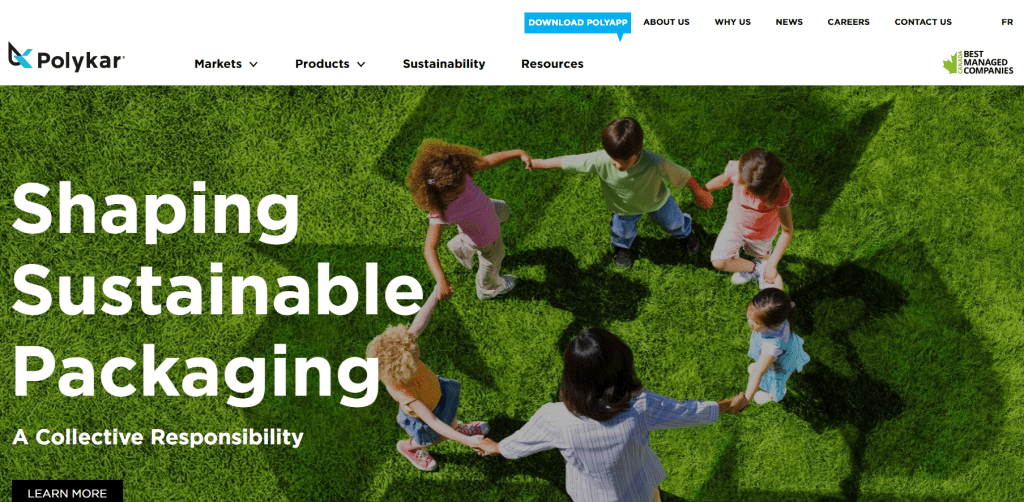
The Good: PolyKar’s Linkedin page is both active and effective. They appear to post regularly on this channel (at least once a month) with a mix of content and formats. While much of the content from the recent weeks was concerned with the opening of a new location, they also post articles about environmental issues and company updates and regular get multiple comments and shares. All of these posts reinforce the brand as an environmental packaging company.
The Not so Good: Polykar appears to use only Linkedin regularly. On PolyKar’s Facebook page, they appear to post much the same content as Linkedin, although less frequently and with much lower engagement rates. While Polykar has a Twitter account, they don’t post a lot of content on that channel, although they do retweet industry news.
The Takeaway: PolyKar appears to have a clearer vision of how to use social media as part of an overall marketing strategy. Their multiple formats (including a lot of video) makes the content eye-catching and engaging. And they are able to maintain their brand messaging throughout their content by focusing on industry information (like recycling and environmental information) that is not specifically product focused.
Can Social Media Change the Conversation?
If a company wants to change the perception of its company and products, social media can be an effective tool for demonstrating a company’s branding message in a way that the traditional website or product literature can’t. As both Petoskey Plastics and Polykar have shown, social media can give companies a chance to have conversations with their customers about broader issues like the environment in ways that are engaging and entertaining. But if social media is to be used effectively for these companies, it really needs to be done consistently and with strategic planning.
 Social Media Marketing from a Beginner's Perspective
Leave a comment