The internet seems to love abandoned buildings. Broken windows, chairs laying randomly about, trees growing through the ceiling. The more desolate and sad they appear, the better.
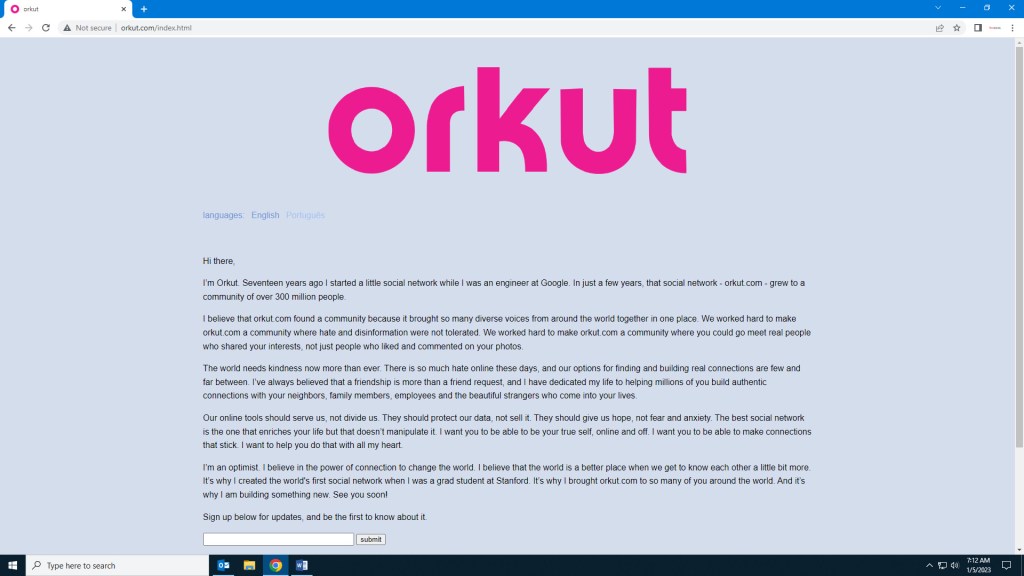
I got that same sort of feeling when I looked at the Orkut.com website today. Where there once was s networking website that had 30 million users, there is just an undated letter from the inventor, talking hopefully about bringing a new and improved Orkut to the internet someday soon. The place where millions of people shared thoughts and ideas is just a plain gray screen with text. Like those abandoned buildings, it seems both desolate and sad.
I don’t think I’m alone in asking – what the heck happened?
I mean, it had to have been something terrible, right? Some company targeted Orkut.com for takeover and ruined it, or maybe a disgruntled user sued it for everything and bankrupted it, or some horrible worldwide event happened that brought Orkut down in its aftermath?
Sadly, the answer is actually a lot simpler.
Failing to Keep up with the Future
To understand where Orkut ended up, you really have to understand where it started. Orkut.com was created by an engineer at Google. For a while, it seemed like that company’s answer to Facebook and other social networking sites. Like Facebook, Orkut offered users the ability to connect with communities of friends, relatives and like-minded people.
Orkut.com’s simple interface and commitment to privacy was especially valued by technology workers and students, and the community functionality allowed them to interact with a variety of people they not only knew but admired. The site became enormously popular in India and South America, particularly in Brazil.
But in a very short time, users expectations about what their networking sites should be able to do began to change. They wanted to see video and share photos among friends. They didn’t want limits to what they could do with their site, whether it was in the number of connections or the media they could use. While other networking sites kept evolving their technologies to meet these needs, Orkut was not able to successfully do so. Not surprisingly, Orkut.com users quickly left, transitioning to other platforms and to growing use of mobile technology that offered more convenience and abilities.
And Failing to Keep Up With Their Customers
The big lesson from the demise of Orkut.com, or any other company that has
not stood the test of time, is that it’s essential to understand your audience
needs and wants, and how those wants and needs will change over time. No matter how much they might love or value your product, if it can’t keep up with these changing demands, that audience will find something that will.
And despite the hopeful message on Orkut.com, it seems like that audience is gone for good.

 Social Media Marketing from a Beginner's Perspective
Leave a comment